Creating privacy is one of the biggest challenges facing homeowners with overlooked, compact or newly landscaped gardens. Tall fencing and solid walls may appear to offer an immediate solution, but they can also block natural light, make boundaries feel more imposing and leave a smaller garden feeling enclosed. The key is to introduce privacy in layers, using carefully positioned structures, screening, planting and shade to protect the areas where privacy matters most without closing off the entire outdoor space.
A garden should feel like an extension of the home: somewhere to relax, dine, entertain and spend time without feeling constantly visible to neighbouring properties. When a patio, hot tub, outdoor sofa or dining table is overlooked, homeowners may find themselves using the space less often than they originally intended.
Privacy does not necessarily mean hiding the whole garden behind solid screens. In many cases, people simply want to reduce direct sightlines towards the main seating area or create a sheltered section where they can sit comfortably. Addressing these specific views is often more effective than attempting to block every surrounding property.
A thoughtfully designed privacy solution can also improve the appearance of the garden. Pergolas, modular screens, climbing plants and layered borders add shape, height and architectural interest while making outdoor areas feel more established.
The best garden privacy designs do not make the space feel hidden or boxed in. They create a comfortable sense of separation while preserving natural light, views through the garden and an open connection with the outdoors.
The right approach will depend on the layout of the property, the surrounding buildings and the height of neighbouring windows. Gardens in modern housing developments often face different privacy challenges from older rural or suburban properties.
Upper-floor windows can look directly onto patios and seating areas, making standard-height fencing ineffective.
Compact gardens may have neighbouring fences only a short distance from the main seating or dining space.
Gardens positioned beside roads, footpaths or shared access routes can feel exposed from more than one direction.
Properties on higher or lower plots may experience direct views that standard boundary treatments cannot fully address.
Privacy can also change during the year. A garden surrounded by mature deciduous planting may feel secluded during summer but exposed once leaves fall. This is why permanent structure and evergreen planting can be useful alongside seasonal foliage.
Before purchasing screens or increasing the height of a boundary, identify exactly where privacy is required. Stand in the main parts of the garden and look towards nearby windows, pathways and neighbouring seating areas. It can also be helpful to sit at the height of your outdoor furniture, as the view from a chair may be very different from the view while standing.
Most homeowners do not need complete screening around the entire garden. Instead, they may need to protect one or two important zones, such as:
Concentrating on these areas helps preserve a sense of space. It also allows privacy features to become part of the garden design rather than appearing as a continuous barrier around every boundary.
Fencing and side screens are useful for views at ground level, but they may not prevent overlooking from upper-storey windows. Where views come from above, an overhead structure, angled shade panel, pergola roof or strategically positioned tree may provide a more practical solution.
One of the most common mistakes in a small garden is installing a large amount of solid screening. Although this may block unwanted views, it can also cast heavy shadows, reduce airflow and make the boundaries feel closer.
Partial screening is often more successful. Slatted panels, trellis, pergola beams and modular sunshades interrupt sightlines while still allowing daylight and air to pass through. This can make a seating area feel protected without creating the impression of an enclosed room.
The direction of the screening matters as much as its size. A relatively narrow panel positioned directly between a seating area and an overlooking window may provide more privacy than a large screen installed in the wrong location.
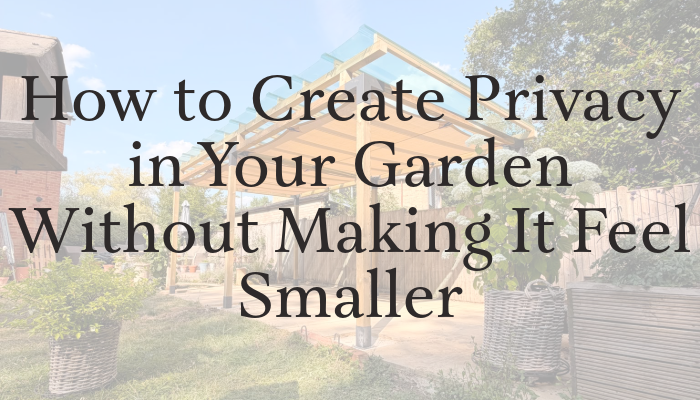
Lighter materials and open structures can also help. A pergola with a polycarbonate roof, for example, can provide useful shelter while continuing to admit daylight. Combined with selective side screening, it can create a practical outdoor room that remains bright and welcoming.
A pergola can provide a strong framework for garden privacy because it addresses both horizontal and vertical sightlines. It defines the area beneath it, creates opportunities for side screening and can reduce exposure from neighbouring properties without requiring the whole garden to be enclosed.
Positioning a pergola over a patio, dining zone or outdoor sofa immediately gives that area a greater sense of separation. Even before screening or planting is added, the posts and overhead beams create a visual boundary between the main living area and the rest of the garden.
A ground-fixed pergola can be particularly useful where homeowners want to create a separate destination away from the house. A wall-mounted design may work well over an existing patio, creating a natural transition between indoor and outdoor living.
Larger gardens may suit a two-bay pergola, allowing different sections to be created beneath one structure. One bay could contain an outdoor dining table, while the other provides a lounge or barbecue area. Privacy screening can then be applied selectively according to the direction of nearby properties.
Where neighbouring windows overlook the garden from above, a pergola can support roof panels, sunshades or climbing plants that interrupt downward views. This can be more effective than simply increasing the height of a fence, particularly when the seating area is positioned some distance from the boundary.
Bespoke polycarbonate roofing can also improve the usability of the area by providing shelter from rain. This allows the pergola to function as more than a privacy feature, creating a dependable outdoor living space that can be enjoyed across more of the British year.
Fixed screening is not always the best answer because sunlight, wind and privacy requirements can vary throughout the garden. Modular features offer greater flexibility by allowing screening to be incorporated into the structure where it is most useful.
Boxgola’s exclusive modular Box Sunshades can help reduce glare, provide shade and improve privacy around a pergola. Their clean, contemporary appearance complements the structure while helping to protect seating and dining areas from direct views.
Rather than surrounding the complete pergola with solid walls, sunshades can be positioned on selected sides or sections. This preserves an open view towards the garden while screening the direction facing a neighbouring property, road or footpath.
Selective screening creates privacy where it is needed while keeping the pergola connected to the wider garden. This is particularly valuable in smaller spaces where fully enclosed sides could feel restrictive.
Modular components can also make it easier to adapt the space over time. Homeowners may begin with an open pergola and add sunshades, roofing, lighting or planting once they have experienced how the garden is used throughout different seasons.
Hard landscaping and planting work best when they support one another. A pergola or privacy screen provides an immediate framework, while plants soften its appearance and help the structure feel naturally connected to the garden.
Climbers can be trained around pergola posts or trellis panels to introduce colour, fragrance and seasonal interest. Evergreen varieties may provide more consistent screening, while flowering climbers can create a softer and more decorative effect during spring and summer.
Tall grasses, bamboo alternatives, pleached trees and layered shrubs can also be used to interrupt direct views. However, planting should be selected carefully according to the available space, soil conditions, maintenance requirements and eventual mature size.
A layered design usually feels more natural than one continuous screen. For example, a pergola could provide overhead protection, modular sunshades could address the main side view, and planting could soften the remaining boundaries.
This approach creates depth. Instead of the eye stopping at one solid fence, it moves between different heights, materials and textures. As a result, the garden can feel larger even though privacy has been improved.
Privacy improvements can significantly increase the comfort of a garden, but rushed decisions may create new problems. Taking time to understand the space can prevent unnecessary expense and help the final design feel balanced.
It is also important to think beyond immediate privacy. The area should remain practical for cleaning, maintenance and future landscaping. Access around pergola posts, screens and planting beds will make the garden easier to manage in the years ahead.
Overlooked gardens are common across Oxfordshire, particularly in expanding residential areas around Didcot, Harwell, Wantage, Grove, Abingdon, Bicester, Banbury, Witney, Carterton, Kidlington and Wallingford. Newer developments often include practical but compact gardens positioned close to neighbouring homes.
Similar challenges affect properties throughout Berkshire, Buckinghamshire, Wiltshire, Gloucestershire, Warwickshire and the wider United Kingdom. Homeowners in Reading, Newbury, Swindon, Aylesbury, High Wycombe, Cheltenham, Gloucester and Milton Keynes may all need to balance privacy with limited garden dimensions.
Boxgola pergola systems can be incorporated into a wide range of outdoor spaces, from compact patios beside modern townhouses to larger detached gardens requiring separate dining and relaxation zones. The modular nature of the system gives homeowners, landscapers and installers greater freedom to plan around the dimensions and sightlines of an individual property.
Boxgola also works with a trusted network of landscapers and installers who can help customers bring their outdoor plans to life. Professional installation may be particularly valuable where the garden has uneven ground, bespoke dimensions, complex roofing requirements or carefully positioned privacy features.
A private garden does not need to feel dark, enclosed or disconnected from its surroundings. By concentrating on the areas that matter most and combining structure, screening, shade and planting, it is possible to create an outdoor space that feels comfortable, attractive and open.
Boxgola provides premium British-made DIY pergola systems, exclusive modular Box Sunshades and bespoke outdoor solutions for gardens of different shapes and sizes. From single-bay seating areas to larger two-bay pergolas with polycarbonate roofing, our systems can help create a more sheltered and private space for dining, entertaining and relaxing.
We support homeowners, landscapers and garden professionals throughout Oxfordshire, Berkshire, Buckinghamshire, Wiltshire, Gloucestershire, Warwickshire and across the UK.
If you are a landscaper or own a landscaping company and would like to learn more about using Boxgola products within your projects, please get in touch to discuss our pergola systems, modular features and opportunities to work with Boxgola.
Explore Boxgola Pergola Systems


Notifications